Mark Zuckerberg: Early Life and Path to Innovation
I. Early Life and Intellectual Foundations
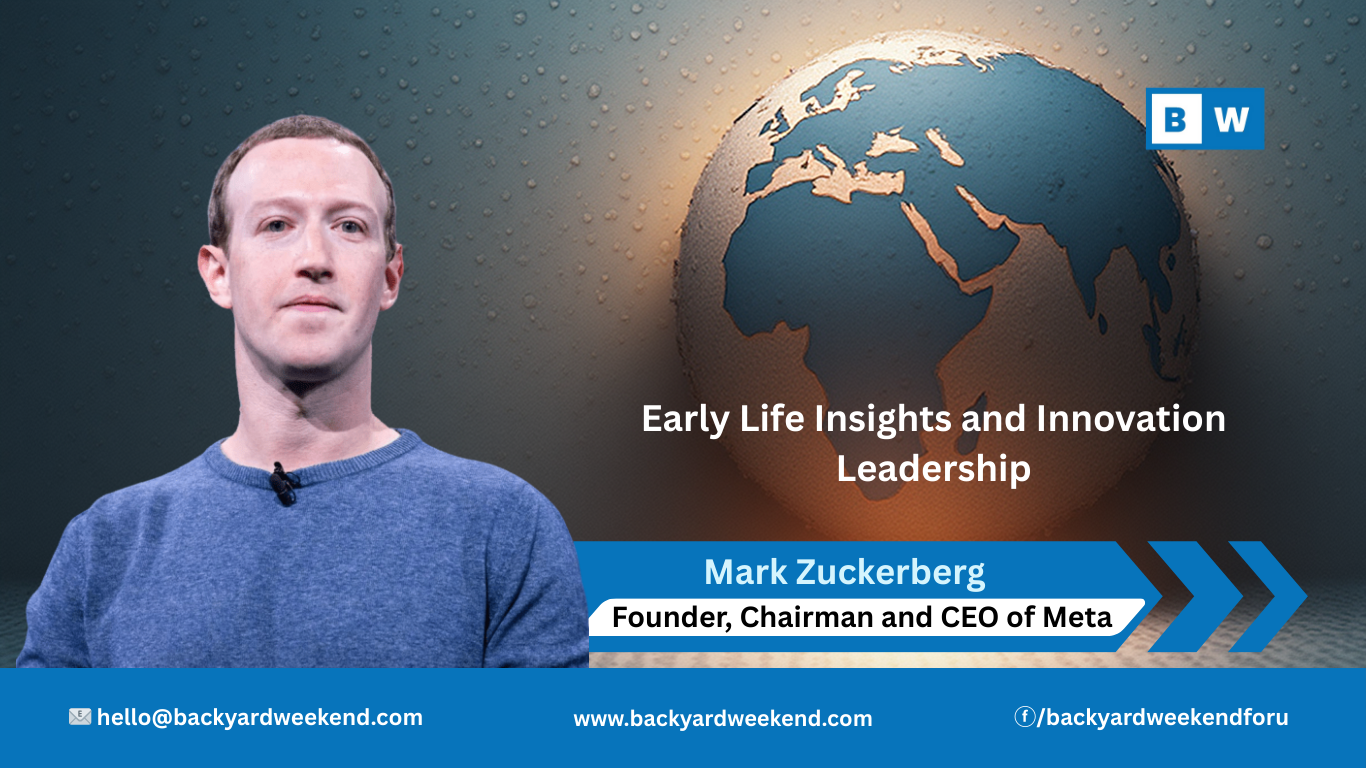
Mark Zuckerberg was born on May 14, 1984, in White Plains, New York, to Edward Zuckerberg, a dentist, and Karen Zuckerberg, a psychiatrist. Raised in Dobbs Ferry within the Reform Jewish tradition, he grew up alongside three sisters in an intellectually stimulating environment. From an early age, Zuckerberg demonstrated a precocious aptitude for technology. By the age of ten, he began coding, and by twelve, he had developed ZuckNet, a proprietary messaging network used both in his father’s dental practice and the family home.
Zuckerberg’s academic journey commenced at Ardsley High School and continued at the prestigious Phillips Exeter Academy, where he distinguished himself both academically and extracurricularly. Notably, he served as captain of the fencing team while simultaneously advancing his programming skills, signaling an early balance of leadership and technical acumen.
II. Harvard Years and Early Technological Innovations
1. Matriculation (2002)
In 2002, Zuckerberg enrolled at Harvard University, pursuing a dual focus on Computer Science and Psychology. This combination of technical and behavioral studies provided a foundational understanding of both software development and human social dynamics.
2. Synapse Project
Prior to university, Zuckerberg had already developed Synapse, an AI-driven music recommendation application. The software’s sophistication attracted purchase offers from Microsoft and AOL, which Zuckerberg ultimately declined, demonstrating early independence in strategic decision-making.
3. Facemash Experiment
During his freshman year, Zuckerberg launched Facemash, a photo-rating website. The project went viral almost immediately, temporarily crashing Harvard’s network. Facemash offered an early demonstration of his ability to harness digital platforms for social connectivity and user engagement.
III. Innovation Launchpad: From Dorm Room to Global Enterprise
1. Founding of TheFacebook (2004)
In 2004, Zuckerberg, alongside co-founders Dustin Moskovitz, Eduardo Saverin, Andrew McCollum, and Chris Hughes, launched TheFacebook, initially designed exclusively for Harvard students. The platform redefined digital social interaction, establishing a model for online community building.
2. Expansion and Strategic Relocation
Following rapid adoption across other universities, Zuckerberg departed Harvard to focus full-time on TheFacebook in Silicon Valley. This strategic move enabled the company to scale efficiently and attract early venture capital.
3. Evolution into Meta
The platform’s transformation from a college directory into a global social network exemplifies Zuckerberg’s strategic foresight. Today, the company operates under the parent organization Meta, reflecting its expanded mission across social media, virtual reality, and digital connectivity.
IV. Patterns of Innovation
Zuckerberg’s progression from early projects such as ZuckNet to Facebook/Meta highlights a consistent pattern: the ability to transform simple technological tools into platforms with global impact. His trajectory exemplifies the intersection of technical proficiency, strategic risk-taking, and vision-driven innovation, hallmarks of contemporary tech entrepreneurship.