Founding Amazon (1994)
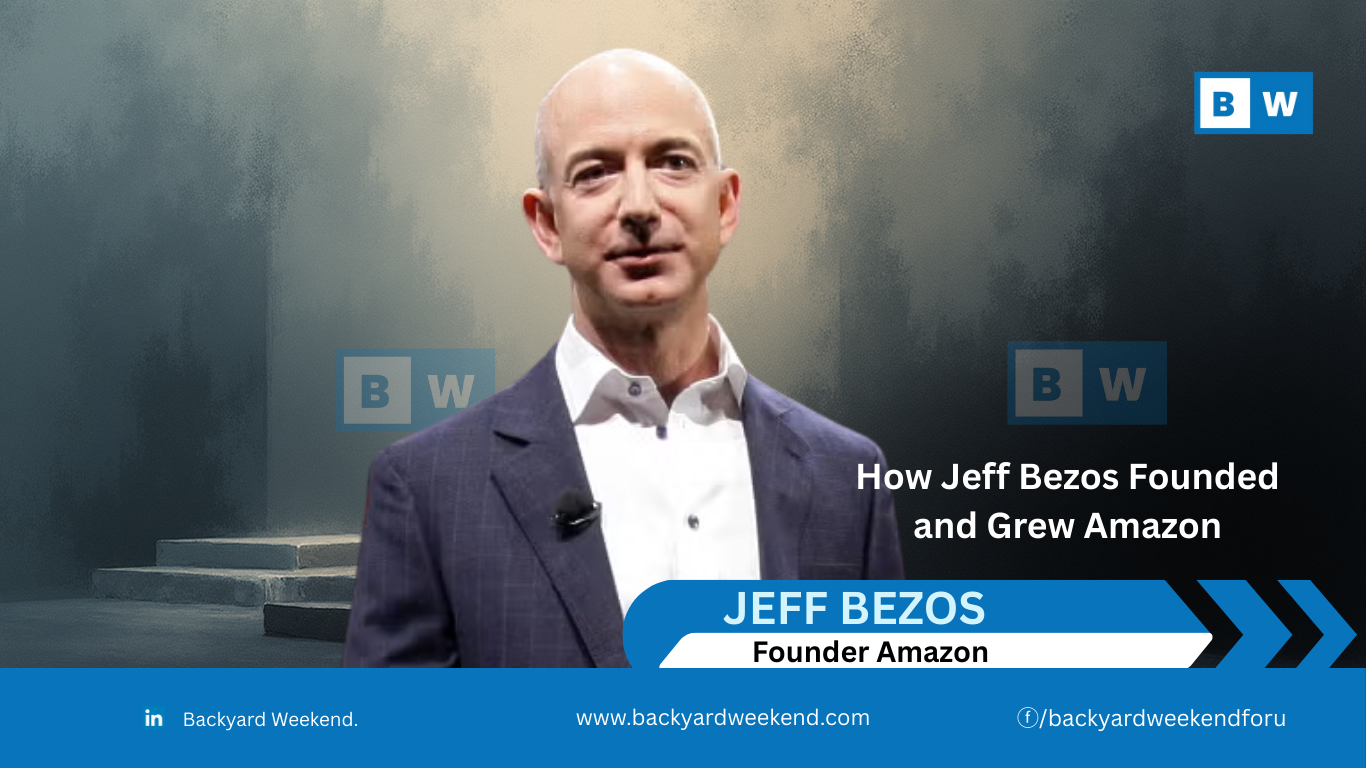
In 1994, Jeff Bezos was a 30-year-old senior vice president at the investment firm D.E. Shaw when he noticed a striking statistic: internet usage was growing at an astonishing 2,300% per year. Realizing the digital world would redefine business, he compiled a list of 20 products that could be sold online. Books stood out because they offered limitless variety, required no storage constraints, and were easy to ship.Determined to seize the opportunity, Bezos left his stable Wall Street career, drove from New York to Seattle with his wife, MacKenzie, and began building the company originally named Cadabra (later changed to Amazon). Seattle was chosen for its strong tech talent and lack of state sales tax for online purchases.Working from their garage, Bezos and a small team designed the first version of the website. Amazon officially launched on July 16, 1995, and within hours, orders started flowing. The first sale was a science book sold to a customer in Texas. Within two months, the young company was generating $20,000 in weekly sales, signaling the beginning of something extraordinary.
Early Expansion (1995–1999)
As customer demand grew, Amazon quickly expanded its product categories, moving from books to music, videos, and toys. The company pioneered innovations like customer reviews and 1-Click ordering, features that strengthened trust and simplified online shopping.During the dot-com boom, Bezos raised $8 million in venture capital and steered Amazon through rapid scale. In May 1997, the company went public at $18 per share, valuing Amazon at $438 million. Despite ongoing losses, revenue soared, and Amazon began operating international websites in Germany and the UK.Bezos also made crucial hires during this period, including leaders like Jeff Wilke, who would later play a major role in Amazon’s logistics and operational excellence.
Diversification and Innovation (2000s)
While many tech companies collapsed during the 2000 dot-com crash, Amazon survived through strict cost-cutting and Bezos’s focus on long-term strategy. In 2000, Amazon launched Marketplace, allowing third-party sellers to list products on the site. This decision dramatically expanded inventory while reducing risk.The company’s most transformative move came in 2006 with the launch of Amazon Web Services (AWS), a cloud computing platform that would later become Amazon’s most profitable business segment. Subsequent acquisitions such as Zappos (2009) strengthened its online retail position, while the launch of the Kindle (2007) revolutionized the e-book market.Between 2001 and 2018, Amazon grew from $1.6 billion to $233 billion in annual revenue, driven by innovation across retail, logistics, and technology.
Modern Dominance (2010s–Present)
The introduction of Amazon Prime in 2005 reshaped customer expectations around shipping speed and loyalty programs, eventually surpassing 200 million members worldwide by 2023. The launch of Alexa and Echo devices in 2014 marked Amazon’s entry into smart home technology, further expanding its ecosystem.In 2017, Amazon acquired Whole Foods, strengthening its presence in offline retail and grocery delivery. As the company grew into a trillion-dollar giant, Bezos stepped down as CEO in 2021 to become Executive Chairman and devote more time to Blue Origin, his space exploration company.Today, Amazon remains a global leader in e-commerce, cloud computing, and consumer technology—built on Jeff Bezos’s long-term thinking, willingness to take risks, and obsession with customer satisfaction.